invoicing
accounting
guides
Invoice Numbering Best Practices (With Examples)
June 23, 2026
How to number invoices the right way — formats that scale, what tax authorities require, and mistakes to avoid.
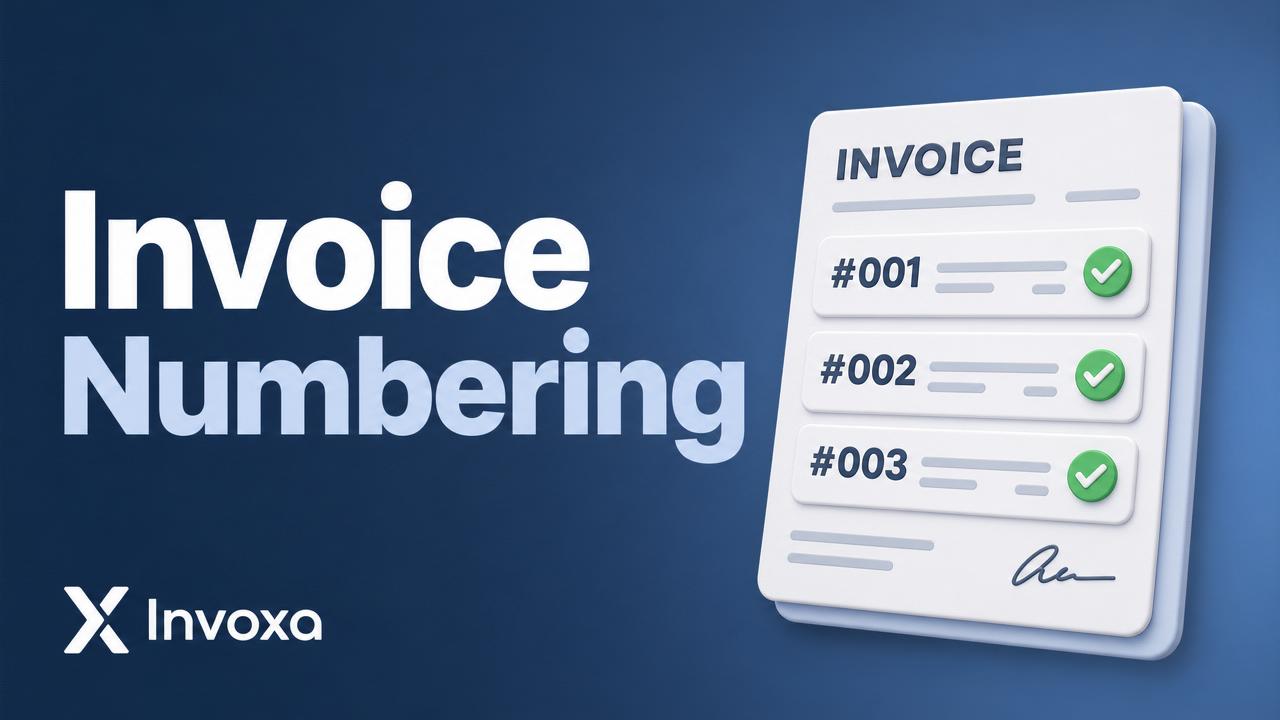
Invoice Numbering Best Practices
Bad invoice numbering causes lost payments, audit headaches, and accounting chaos.
The rules
- Sequential — no gaps, no repeats
- Unique — every invoice has its own number
- Permanent — never change a number once sent
- Predictable
4 formats that work
- Simple sequential: 1, 2, 3 — easy, but reveals client count
- Padded sequential: 0001, 0002 — more professional
- Year-prefixed: 2026-001 — best for most businesses
- Client-prefixed: ACME-001 — many small invoices per client
What tax authorities require
- HMRC (UK) — sequential, no gaps
- IRS (US) — sequential or otherwise traceable
- EU VAT — strictly sequential, must explain gaps
- India GST — alphanumeric, max 16 chars, restarts each fiscal year
Common mistakes
- Reusing a number after a cancelled invoice → use credit notes instead
- Restarting at 1 mid-year
- Going from 6 to 47 to look bigger → tax audits hate this
Invoxa auto-numbers invoices with your chosen format and prevents duplicates.